Viola (1956-1989), *1928 †2018
He was born on June 4, 1928 in Prague into a music-loving family. Since childhood, he wanted to learn to play the violin, so he became a student of his mother, Antonie Škampová, who was a violin teacher, already from the age of four. Although his father was a meteorologist, he loved music and also played the piano. Milan has a brother, Mirko Škampa, who plays the cello. Today he is a prominent educator and, together with his wife Vlasta, founded the Prague Student Orchestra at the Lounské Conservatory.
The first performance for Milan took place at the Sladkovský Hall in the Municipal House in Prague when he was five years old.
In 1941, Milan’s mother, Mrs. Škampová, decided to entrust Milan to the hands of her classmate, Professor Ladislav Černý, a violinist, with whom he privately perfected his skills until 1947. Toward the end of the war, he was saved by the school principal changing the date on the certificate of completion of studies before total deployment, referring to the years 1927 and 1928. At the age of sixteen, he became a soloist at the Czech Radio, where he performed until 1956. This was preceded by an audition before a commission of the radio music broadcast led by director K.B. Jirák. The conditions for preparation were tough; he practiced Beethoven’s concerto in a cold cellar during air raids. He was accepted. Every third Sunday, he had his own live broadcast. However, it still wasn’t enough for the labor office. Fortunately, K.B. Jirák helped him get in touch with Rudolf Leo Vašat, who had an entertainment orchestra and accepted Milan as the third violin. He played there twice a week until the revolution. He also achieved success in Czechoslovak and international competitions in Prague 1947, Berlin 1951, Warsaw 1955. He premiered violin concerts by Emil Axman and Vladimír Sommer with conductor Karel Ančerl and the Czech Philharmonic and the Symphony Orchestra of the Czech Radio in 1950. At the Academy, he was a student of Professor Alexander Plock and Professor Daniel, both students of Professor Ševčík and concertmasters of the Czech Philharmonic. He graduated in 1951 with Suk’s Fantasia. In the years 51-52, he was an assistant to Professor Daniel and then an aspirant at the Academy of Performing Arts. He completed his musical studies at Charles University in 1952 with a dissertation on Josef Suk, the man, composer, and performing artist.
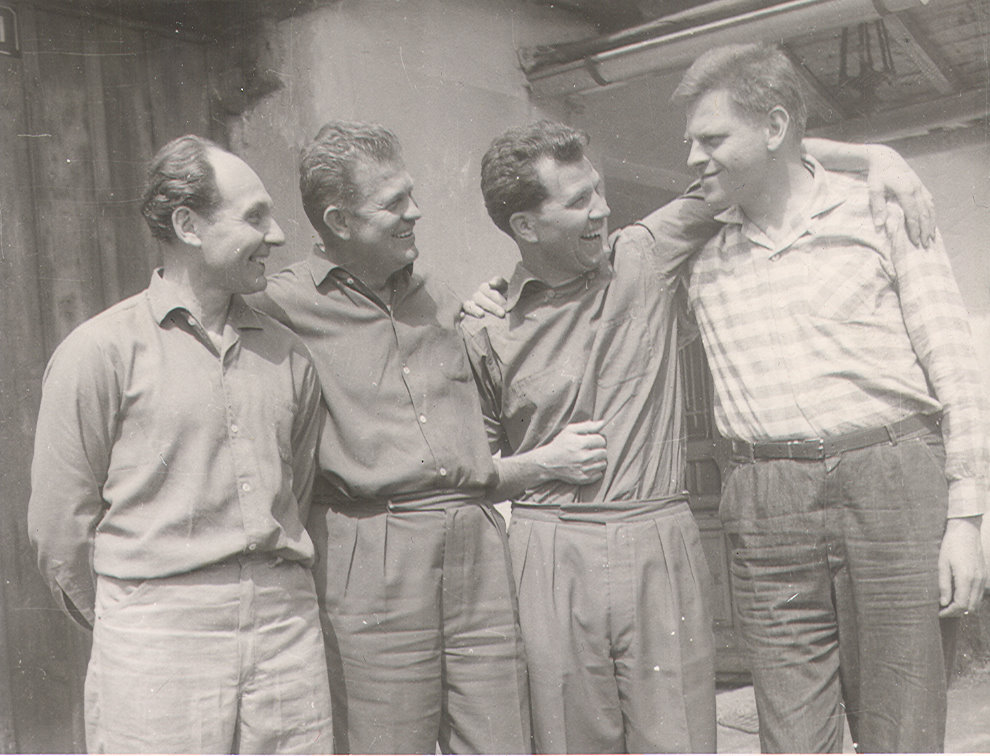
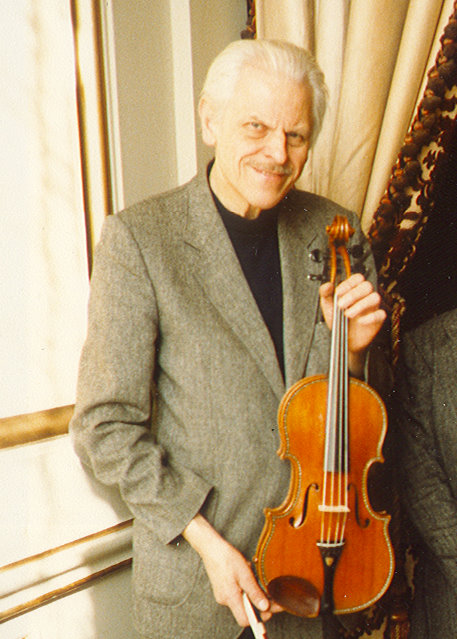
As for Jiří Novák’s primary school, January was again a turning point in his artistic life on January 7, 1956, when he was caught by a telegram in Slovakia. It was sent by Antonín Kohout with an interesting offer for him to come. He decided to accept it for 33 years! He was handed a viola by Ferdinand August Homolka, which was also played by Antonín Dvořák. However, he had never played the viola, although he was taught by the legendary violinist Černý. The circumstances of Milan’s entry into the quartet were sad for Jaroslav Rybenský, originally the primary and then the violinist, because his health did not allow him to continue due to pain in his arm. For Škampa, on the other hand, it was a big decision to leave behind the prepared violin repertoire and start familiarizing himself with the viola to quickly prepare for all their quartet repertoire. He went through the same process as Rybenský did in 1947. At that time, the twenty-eight-year-old Škampa had to study Brahms in B flat major and Janáček No. 1, Mozart in D minor for a recording for the radio in Bremen. In June, he had Stockholm ahead of him, then Helsinki, where he could personally meet Jean Sibelius, where they performed his quartet “Voces Intimes,” and another festival in Salzburg. They recorded Mozart in D minor and E flat major for the prestigious Columbia company. For nine months, he adapted to the quartet’s established repertoire and succeeded.
Since 1958, a musicological work on Leoš Janáček and his string quartets has been created. The reconstruction of Janáček’s String Quartet No. 1 “Inspired by Tolstoy’s Kreutzer Sonata” (1st edition by Editio Supraphon 1975) has become a guide for interpreting the work. However, the reconstruction of Janáček’s String Quartet No. 2 “Intimate Letters,” completed in 1979, has not yet been published.
His teaching activity is also very significant and noteworthy. At the Academy, he worked as an assistant professor in 1969, was appointed associate professor in 1975, and a full professor in 1990. Among his students were Miroslav Sehnoutka (Panocha Quartet), Jiří Heger (soloist, concertmaster of the Singapore Symphony Orchestra, professor at the conservatory there), Zdeněk Zindel (principal violist of the PKO), Jaroslav Pondělíček (principal violist of the Czech Philharmonic). Additional students of his are active in the Czech Philharmonic: Petr Žďárek, Ivan Pazour, Jaroslav Pávíček, René Vácha, Lukáš Valášek. His other students perform in various orchestras: Milan Radič (principal violist of the Mozarteum Salzburg Orchestra), Miroslav Kašný (principal violist of the Bohuslav Martinů Philharmonic Orchestra in Zlín), Vladimír Zajačik (Prague Symphony Orchestra), Radim Sedmidubský. The Škampa Quartet, the Haas Quartet are also prominent chamber ensembles from his class.
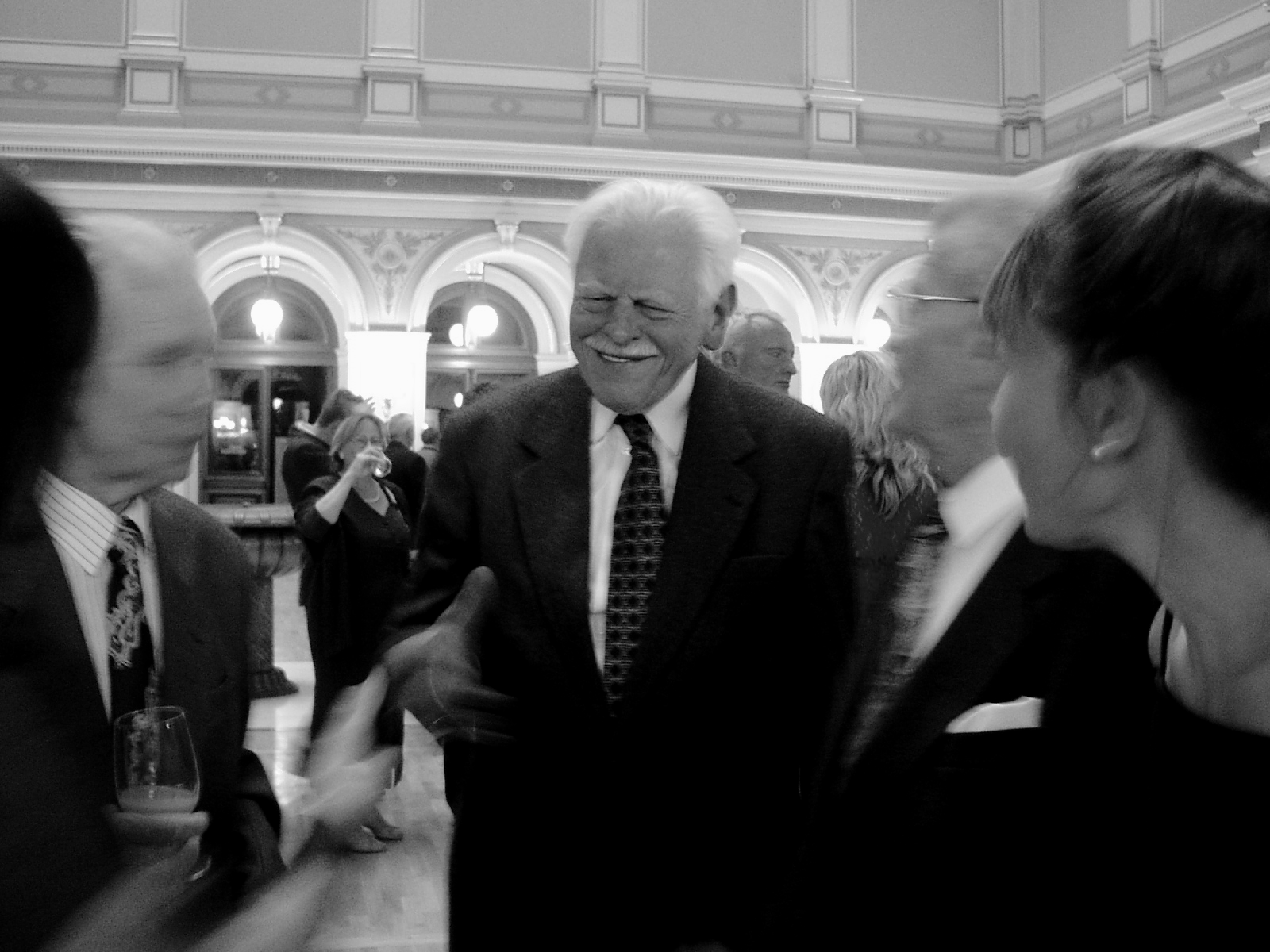
Since 1980, he has been regularly leading master classes for the fields of string quartet, piano trio, viola, and violin in many countries, and he is one of the most sought-after judges of significant international interpretive competitions, especially quartet competitions, around the world.
The Scuola di Musica di Fiesole in Florence became a venue after the end of the quartet activity. From 1990 to 1997, he led the string quartet class, focusing on Quartetto Prometeo, Quartetto d´archi di Torino, Quartetto di Fisiole.
In 2002, he was involved in the establishment of the European String Quartet Academy in Florence. He served as a permanent teacher at the Dutch String Quartet Academy.
Since 1958, musicological work on Leoš Janáček and his string quartets has been created. Reconstruction of Janáček’s String Quartet No. 1 “Inspired by Tolstoy”.
“Kreutzerovy sonáty“ (1st edition Editio Supraphon 1975) has become a guide for interpreting the work. The reconstruction of Janáček’s String Quartet No. II “Intimate Letters”, completed in 1979, has not yet been published. From solo gramophone recordings he recorded:
- W. A. Mozart: Sinfonia concertante (with Josef Suk and the Czech Philharmonic)
- W. A. Mozart: Duo in G major (with Jiří Novák) and B-flat major (with Josef Suk),
- Bohuslav Martinů: Sonata for Viola and Piano
(with Jiří Novák, the first violinist of the Smetana Quartet). - Bohuslav Martinů: Three Madrigals for Violin and Viola
(with Jiří Novák)
Thanks to a good tip from Milan Škampa and with the help of Antonín Kohout, the state collection acquired beautiful Italian instruments, which were later loaned to the Smetana Quartet. The viola from the state collection is likely from the workshop of Antonio and Hieronymus Fr. Amati of Cremony 1616.
Milan Škampa was married twice, his first wife was the pianist Jaromíra Škampová and together they have two daughters Milena and Viola. With his second wife Jarmila, he has two sons Milan and Jan.
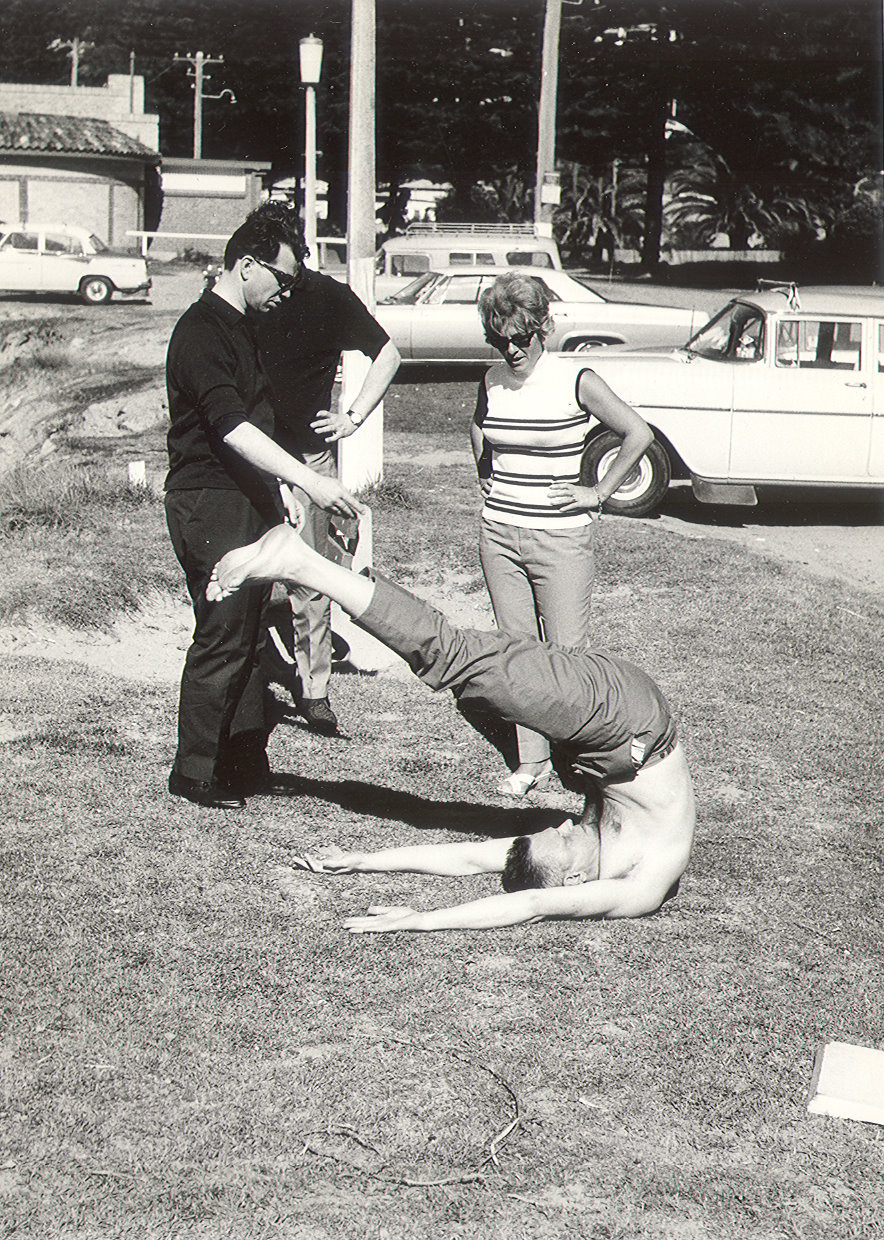
From the beginning, he was a supporter of a healthy lifestyle, even on trips he regularly practiced yoga, jogging, and healthy eating.
He reached the blessed age of almost ninety, which he would have celebrated in June. He left this world on April 14, 2018, at his family’s home in Prague.
Gallery