


The beginnings of the Smetana Quartet 1943-45
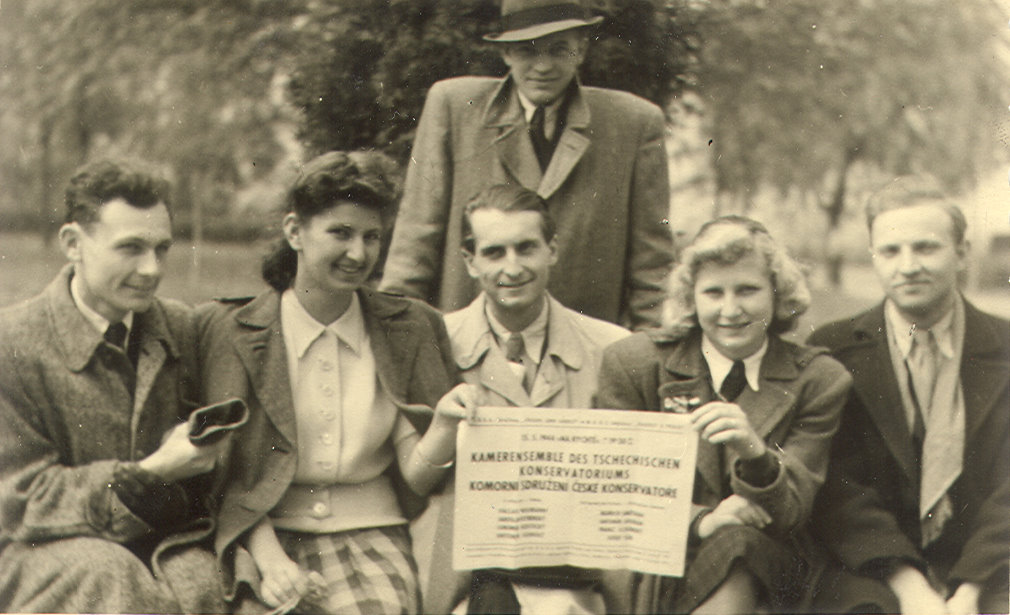
At the origin of the quartet, which evolved into the famous Smetana Quartet, stood Antonín Kohout. A significant milestone was the meeting at the Conservatory with the violinist Václav Neumann who was a year younger. These two strong personalities were connected by a strong and unified interest in playing in a quartet. Václav Neumann played the first violin, Josef Vlach the second violin, Neumann’s brother the viola, Kohout the cello, and in May 1941 they debuted as the Smíchov Quartet in Nelahozeves with Dvořák’s String Quartet in E-flat major, known as the “Slavonic”. They rehearsed at Neumann’s place in Smíchov, where they had great support and facilities from Neumann’s father, Ing. Neumann, and the professional supervision of Prof. Josef Micka. In 1943, Professor Josef Micka and Karel Pravoslav Sádlo, along with Kohout, worked on the new lineup of this ensemble. On September 28, they performed at the City Library in the new lineup with Václav Neumann, Jaroslav Rybenský on violin, Antonín Kohout on cello, and Lubomír Kostecký on viola under the name Chamber Association of the Conservatory of Music. Later they performed under the name Czech Conservatory Quartet.
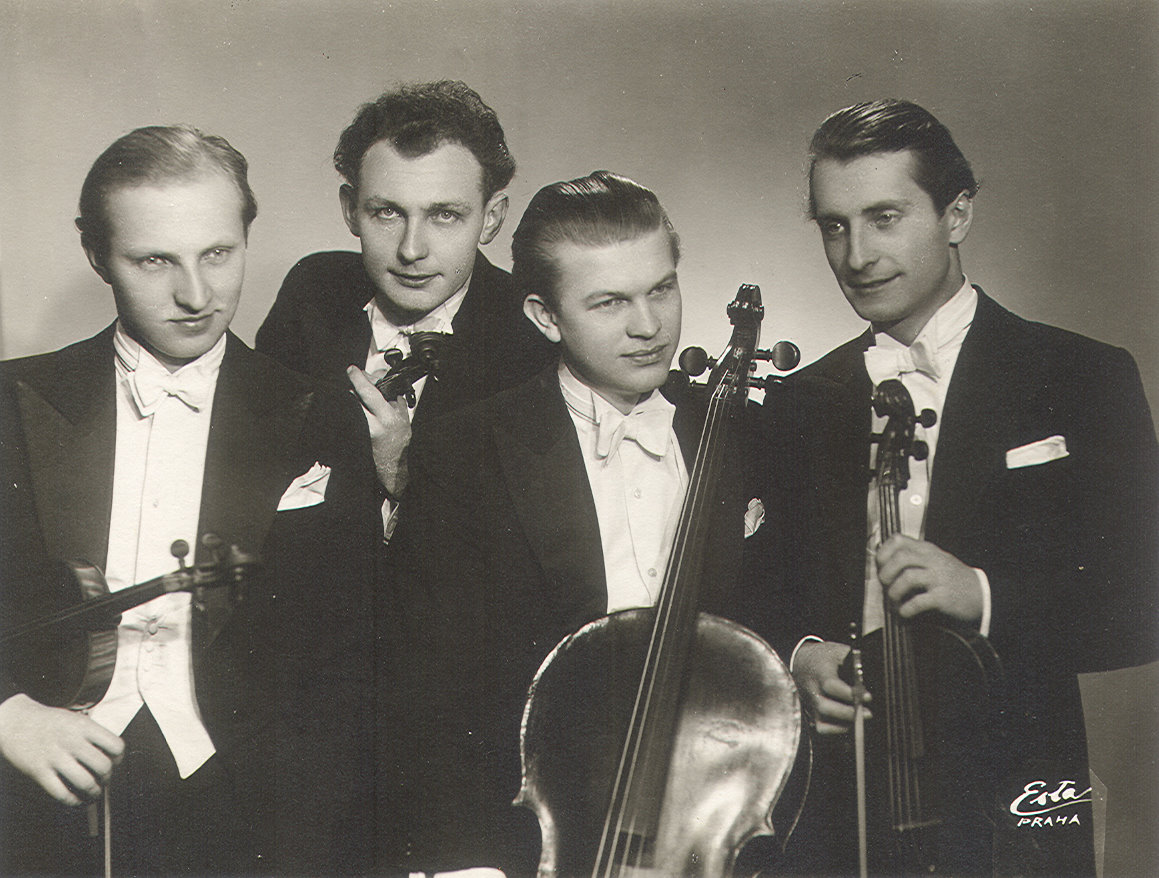
The first concert in the lineup of Jaroslav Rybenský, Lubomír Kostecký, Václav Neumann, and Antonín Kohout took place in the main hall of the Central Library on November 6, 1945. The program featured string quartets by Bedřich Smetana and Vítězslav Novák. The Smetana program became synonymous with their name. Further contacts with their teachers from the Conservatory, especially K. P. Sádle and Josef Micka, were of great importance for their further development. In 1946, they prepared for their first international competition in Geneva, where they performed Ravel’s F major, Dvořák’s A major, and Beethoven’s op. 59 “Razumovsky”. Although they did not have a very extensive repertoire, they still placed third together with the Turin Quartet.
In the same year (1946), Václav Neumann decided to leave the quartet and focus on conducting. The question arose, who would be the first violin? There was a great desire to acquire the concertmaster of Český komorní orchestr, Jiří Novák, whom Václav Talich had nurtured for a solo career. After an agreement, Jaroslav Rybenský switched to the viola and showcased his qualities as the new first violin, which was not in vain. Thus began the famous era of the Smetana Quartet. Novák was an exceptional violinist, bringing virtuosity, admirable musical instinct, and a touch of uniqueness to the quartet. Lubomír Kostecký, as the second violin next to Novák, had a challenging role, but in the end, we must acknowledge his honesty and ability to adapt to him. Kohout was a cellist with a solid rhythm, quality tone, and an invaluable manager for the quartet. He could rationally solve many obstacles that could threaten the quartet’s activities.
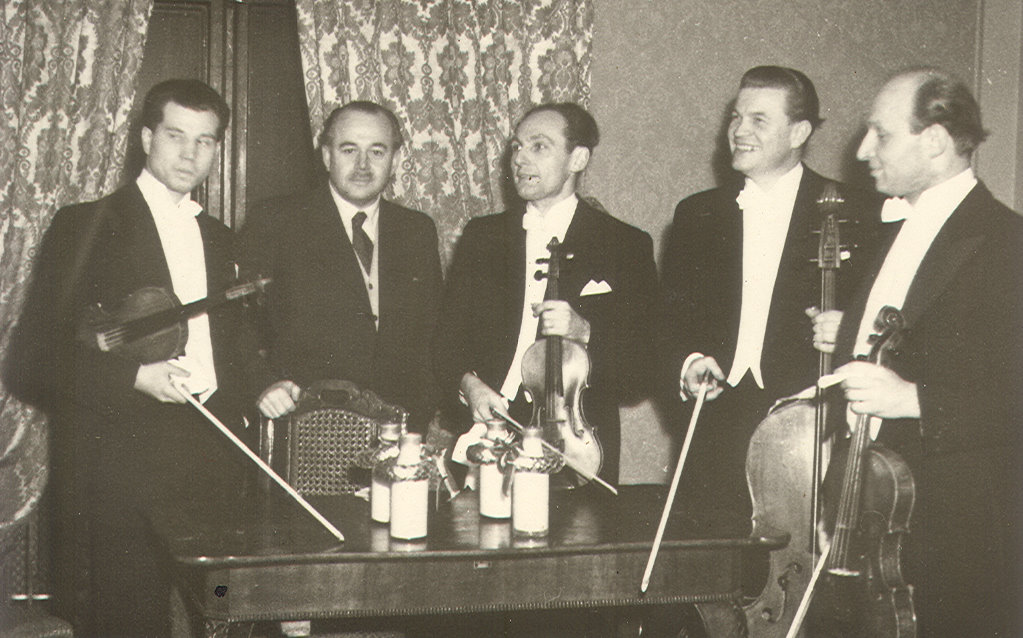
Since January 1947, when Jiří Novák joined the ensemble, they started to re-study their entire existing program, performing only seven concerts that year. A similar situation occurred eight years later with the departure of Jaroslav Rybenský and the arrival of Dr. Milan Škampa. They diligently studied both new and previously rehearsed repertoire with the new lineup. By 1948, they had an extensive repertoire, and the number of concerts increased. They participated for the first time in the Prague Spring Festival in 1949, where they performed both of Smetana’s quartets and Schubert’s Death and the Maiden. Since then, we can trace their remarkable and often discussed flawless performances, continuing to the present day.
The number of domestic concerts continued to grow. Their first international experience awaited them in Poland. Also interesting was the environment in which they performed at home. Factory halls, hospitals, army buildings, concerts for apprentices at ČKD, and educational concerts provided opportunities to establish their program. Antonín Kohout sought out these gigs and eventually traditional concert halls across the country were offered to them. This was followed by their first phonograph recording in the context of a string quartet competition in 1950.
Interesting fact,is that in the first place was a girls’ string quartet from Moscow and then the Smetana Quartet.
In 1951, they became a chamber ensemble of the Czech Philharmonic and were thus at least somewhat financially secure. After certain problems, they were also relieved of the obligation to play in the orchestra and could fully focus on preparing in the quartet.
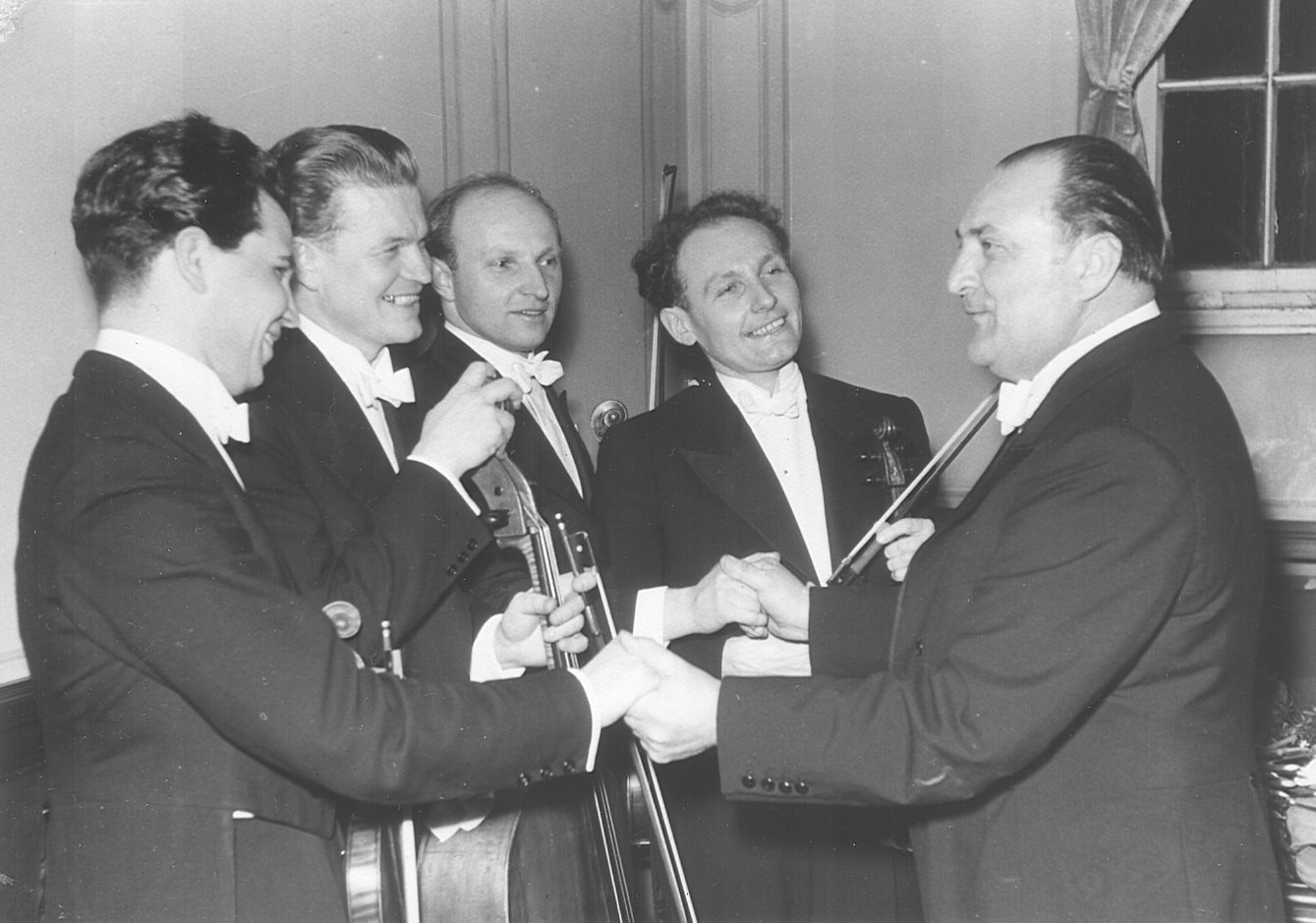
In 1952, the number of their concerts increased to 72 and besides Hungary, they appeared at the Vienna Musikverein, where they played very often and for many years. During this time, they met Franz Konwitschny at the Prague Spring, who was already thinking about inviting the Smetana Quartet to Leipzig as well.
On June 26th, their higher education studies were also concluded with graduate concerts. Jiří Novák performed Chaikovsky, Lubomír Kostecký with Tchaikovsky, and Jaroslav Rybenský with Handel on the viola. During this time, Antonín Kohout had to deal with, among other things, his health issues and was unable to play for a couple of months. In the following years 1953-54, their quartet repertoire significantly expanded, and the number of international concerts increased to around a hundred annually. The ratio of domestic concerts to foreign ones began to change.
Holiday preparation
When violist Jaroslav Rybenský was still a member (until 1956), the members of the Smetana Quartet spent their summers with their professor Josef Micka in rented cottages. Initially in Podbořanský Rohozec in a house where coffins were originally manufactured. One summer, they even had the opportunity to stay at Hluboká nad Vltavou Castle.
By the end of the 1950s, when Antonín Kohout and Lubomír Kostecký already had families, their desire and necessity to spend the summer outside of Prague together with their children was such that they began looking for a place where they could also prepare for the new concert season with their quartet colleagues. Pianist Josef Páleníček first invited Antonín Kohout to Lučany nad Nisou, which sparked the idea of buying their own cottages there.
Housing here was abundantly available in the 1950s when it was forcibly abandoned by the Sudeten Germans. There was hardly any interest in log cabins, the state was selling them almost for free. Those that didn’t sell were often demolished by officials with bulldozers. The area of Lučany between Smržovka and Horní Maxov also charmed prominent violinist and educator Alexander Plocek and artist Jiří Trnka. Later, pianist Mirka Kramperová and her husband conductor Vítěz Micka also appeared here as cottage owners.
The Kohout family first moved into one cottage and later chose the opposite “Swiss style” cottage. The selection of the cottage was left to Jiří at the Nováks’, then still a bachelor, by his mother. She chose three properties and then (unfortunately) opted for the largest one. The cottage from 1876 was originally a butcher’s shop with a store and a smokehouse. The condition of most cottages required immediate repairs, especially of the rotten floors and broken roofs, as all the buildings were plagued by dampness, woodworm, and dry rot.
At Kostecký’s, Lubomír worked on repairs only with the help of his son and craftsmen, he liked to have everything personally under control, which was to the benefit of the matter. In Jiří’s case, thanks to the craftsmen of that time, repairs were mostly done in the style of a “Potemkin village”, no one carefully supervised the work. Jiří Novák was not very skillful at these tasks, even though he was from the countryside. In his childhood, he only helped his parents by hoeing potatoes and cutting some grass. His father never let him do anything so he wouldn’t hurt his hands.
When Jiří Novák, at the age of forty, got married in 1964, the relationship with his mother changed in such a way that he eventually had to rent a room in another cottage in Lučany nad Nisou for the summer. Thanks to this, his daughter Dagmar was able to be born relatively peacefully in the spring of 1966. In addition to quartet rehearsals, Jiří also practiced the violin concert by B. Bartók over the summer, which he later performed with the Czech Philharmonic.
Milan Škampa came to Lučany nad Nisou only after 1957, when he became a violist of the Smetana Quartet. He chose, with his family, a brick house in the neighboring Horní Maxov, unlike the others. His brother, cellist and educator Mirko, bought a timbered cottage in Lučany, which he still owns to this day.
The Smetana family fell so in love with cottage life in Jizerky that they even had their children transferred to the local elementary school for a few months. The Smetanas always set aside the whole month of August to prepare for the concert season. Rehearsals took place from nine to one. First, the rehearsals were held at the Kohouts, later also at the Kosteckýs.
The last week of August, they regularly rehearsed their prepared repertoire in the Sokolovna in Lučany, the Church of the Assumption of the Virgin Mary, and the cinema in Tanvald. An interesting event was the concerts at Malá Skála in Sokolovna, along with the opening of the paintings of the painter Josef Jíra, who also had his studio there. He was one of many artists who captured the Smetana Quartet on canvases during rehearsals or at concerts in the Jizera Mountains. The annual last summer concert took place in Prague at Prague Castle. Since the sixties, the Smetana Quartet regularly awaited their autumn Japanese tour, which sometimes lasted up to a quarter of a year.
Around 1963, the cellist of the Quartet of the capital city of Prague Zdeněk Koníček also owned a cottage in Jiřetín pod Bukovou, which is a short distance from Lučany nad Nisou. At that time, they were still friends with the Smetana brothers, who combined work with fun. They celebrated with their families and friends in a lively atmosphere at traditional “summer New Year’s Eve” parties in masks. Naděžda Kostecká was a great hostess and cook. With Lubomír, they managed to create a wonderful atmosphere for a large number of guests of various beliefs and political views. Marie Kohoutová, on the other hand, knew how to make, among other things, her famous dumplings and sweet cakes.
Later, another significant person joined this family of musicians and cottagers in Smetanovce, sound engineer Milan Kulhan. He sparked the recording of the historically first digital music in collaboration with Nippon Columbia/Denon and Supraphon in the church in Lučany in June 1975. You can learn more from the interview (in the recordings section) directly with Mr. Kulhan, who provided unique memories of that time that cannot be repeated today.
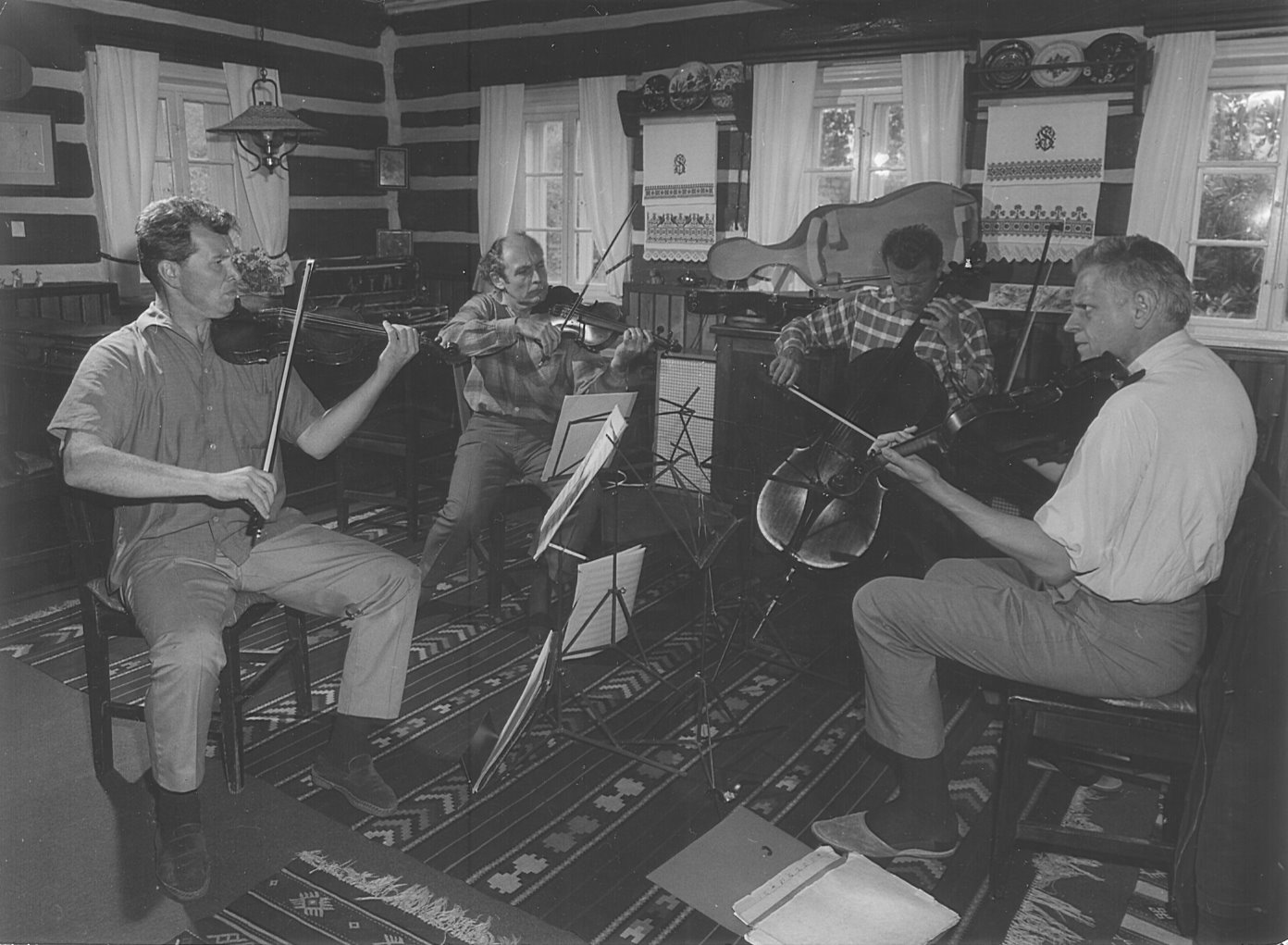
In 1975, a television documentary about the Smetana Quartet was created in August as part of the series “They Have a Name in the World”. The direction was taken by Ladislav Váňa in the presence of Evald Schorm, who unfortunately at that time had a ban on activities for political reasons. Most of the film takes place in the Jizera Mountains. Even today, descendants of the Smetana Quartet maintain both the cottages and musical traditions in Lučany nad Nisou in the form of summer chamber concerts.
Final cast
In 1954-55, they performed on most European stages, offering a program that included both Czech and German music. They were not afraid to play Debussy in Paris, Beethoven, Mozart, Schubert, Brahms in Salzburg and Bonn. They were enthusiastically welcomed by both critics and audiences everywhere. Franz Konwitschny invited them again to collaborate with the Gewandhaus Orchestra. At a concert in Leipzig in April, Novák performed with Suk’s Fantasy and Rybenský with Bartók’s viola. After the break, they appeared as a quartet with Smetana’s “From My Life”. It is difficult even today to find such a program and lineup.
In 1955, they had to deal with the health issue of Jaroslav Rybenský. He had major problems with his spine and thus his left arm, finishing concerts with great pain. Growths on his spine were pressing on a nerve. After much deliberation, Rybenský decided to leave the quartet, which was now receiving the best reviews on European stages. It was even seriously discussed about a major concert tour to America. Once again, Kohout resolved the situation with a proposal to try twenty-eight-year-old violinist Milan Škampa. He knew him from childhood as a talented musician with a rich imagination, amazing energy, and perfect memory, but who needed more concentration. In January 1956, Kohout sent a telegram to Milan in Slovakia, who was performing a solo concert with his future wife Jaromíra, asking if he would accept the offer to join the Smetanovci. In just a few months, Škampa achieved the impossible! Swapping his violin for a viola and mastering the established program of the Smetanovci, even from memory! Their first challenging test was a tour of Germany. They succeeded and were hailed by critics as world-class. The program was very demanding, featuring Brahms’ B flat major quartet op. 67, and they introduced Janáček No. 1, which they also recorded along with Mozart’s D minor for radio in Bremen.
In June 1956 they arrived at the festival in Stockholm with Beethoven’s C minor op. 18. This was followed by Helsinki, where at the request of Jean Sibelius they performed the quartet D minor Voces intimes in his presence. In August, they were expected at the festival in Salzburg.
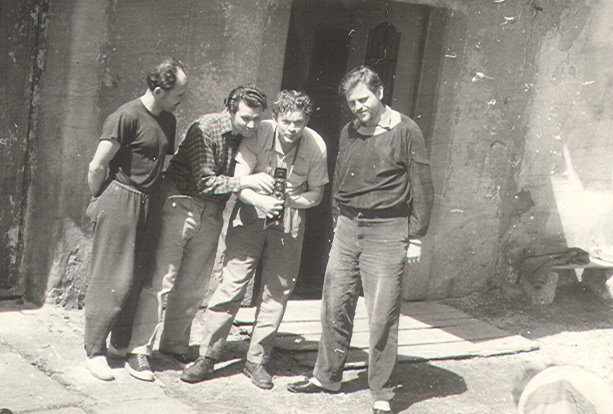
Milan Škampa proved himself after difficult nine months. They gradually presented a restudied program. Škampa then faced another test. Recording of Mozart’s d minor and E-flat major for Columbia, with which they appeared in October on a tour of Britain. This record still maintains high artistic quality.
Another interesting concert took place on October 15, 1956. They met with the Czech Philharmonic and Karel Ančerl at the Royal Festival Hall in London, where they performed Elgar’s Introduction and Allegro for String Quartet and String Orchestra.
They also receive official recognition, the Prize of the City of Prague, state awards, the Order of Labor, and others. They have become very young holders of these prestigious awards for this time.
America
On February 3, 1957, they began their American tour in New York, which ended on March 31 with a final concert in Elkins Park, Pennsylvania. They offered predominantly a Czech program, including a quartet by the contemporary composer Vítězslav Novák. During the thirty-one concerts, they introduced Czech music to the Americans primarily. They were the first to present themselves here as a Czech chamber ensemble. Their famous predecessors Jan Kubelík, František Ondříček, Jaroslav Kocian, Ema Destinnová, and Karel Burian left an indelible mark here over twenty years ago!
Thanks to their magnificent success, global managers have started to take an interest in our other musicians and artists. After America, the members of the Smetana Quartet also stopped in Iceland to present Czechoslovakia at three concerts.
After a short time at home, they had a May tour in Germany waiting for them. And in Prague, they even managed to perform a full-length concert. They were the only chamber ensemble performing at the Prague Spring Festival.
On August 26, after preparation and rest in Lučany, they set off to Australia, New Zealand, then to Indonesia and India. They returned home before Christmas Eve! This time, the program was not exclusively Czech as in the USA.
Japan
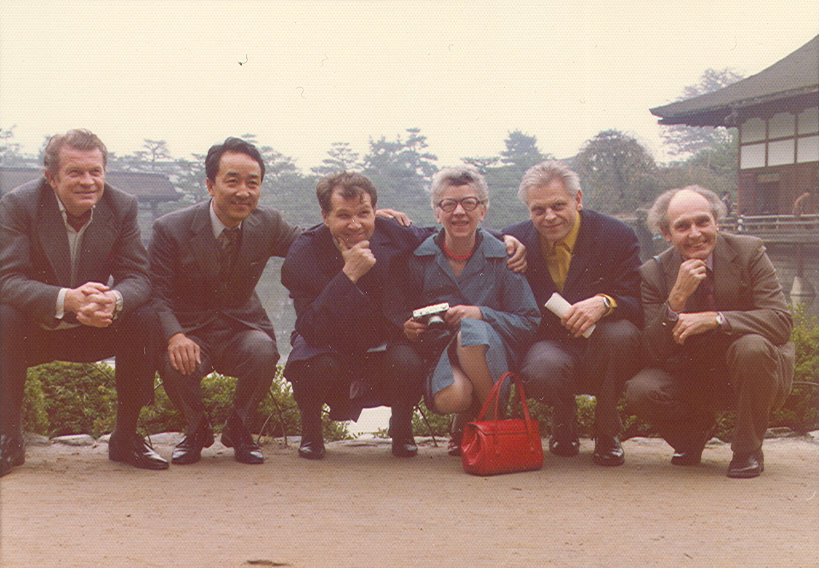
In 1958, the first trip of the Czech quartet to China and Japan took place. Again, with great success. The following year, they also welcomed the Czech Philharmonic to Japan. The Smetanovo Kvarteto was invited by the Japan Arts Corporation agency led by Mr. Yasuo Nakato. Their collaboration lasted until the end of the quartet’s activity.
In 1959, the quartet was invited again by America and Canada.
In 1961, a major tour of Europe took place. At that time, the members of Smetanovo Kvarteto realized that they were neglecting concerts in their home country. Therefore, that fall they performed in thirty-one Czech cities.
Another issue had to be addressed – what instruments they would play on. A crucial name in this regard was the violin maker Přemysl Otakar Špidlen. From January 11, 1961, the entire quartet played on the instruments made by this Czech master. It was a good choice. Of course, it would have been fitting for musicians of their caliber to acquire instruments by Italian masters. However, the quartet, as well as our country, did not have the immense funds for such an investment. It wasn’t until 1975 that the opportunity to have Italian instruments arose through a state collection. The initiative and valuable tip came from Dr. Milan Škampa, who knew about suitable instruments for the quartet from the violin maker Gunter in Switzerland, and thus the Ministry of Culture acquired these instruments. Jiří Novák played on the Stradivari 1729 “Libon,” Lubomír Kostecký on the Francesco Ruggieri – Cremona 1694, Antonín Kohout on the Giovanni Grancini – Milano 1710, and Milan Škampa likely had the Antonius et Hieronymus Fr. Amati – Cremona 1616.
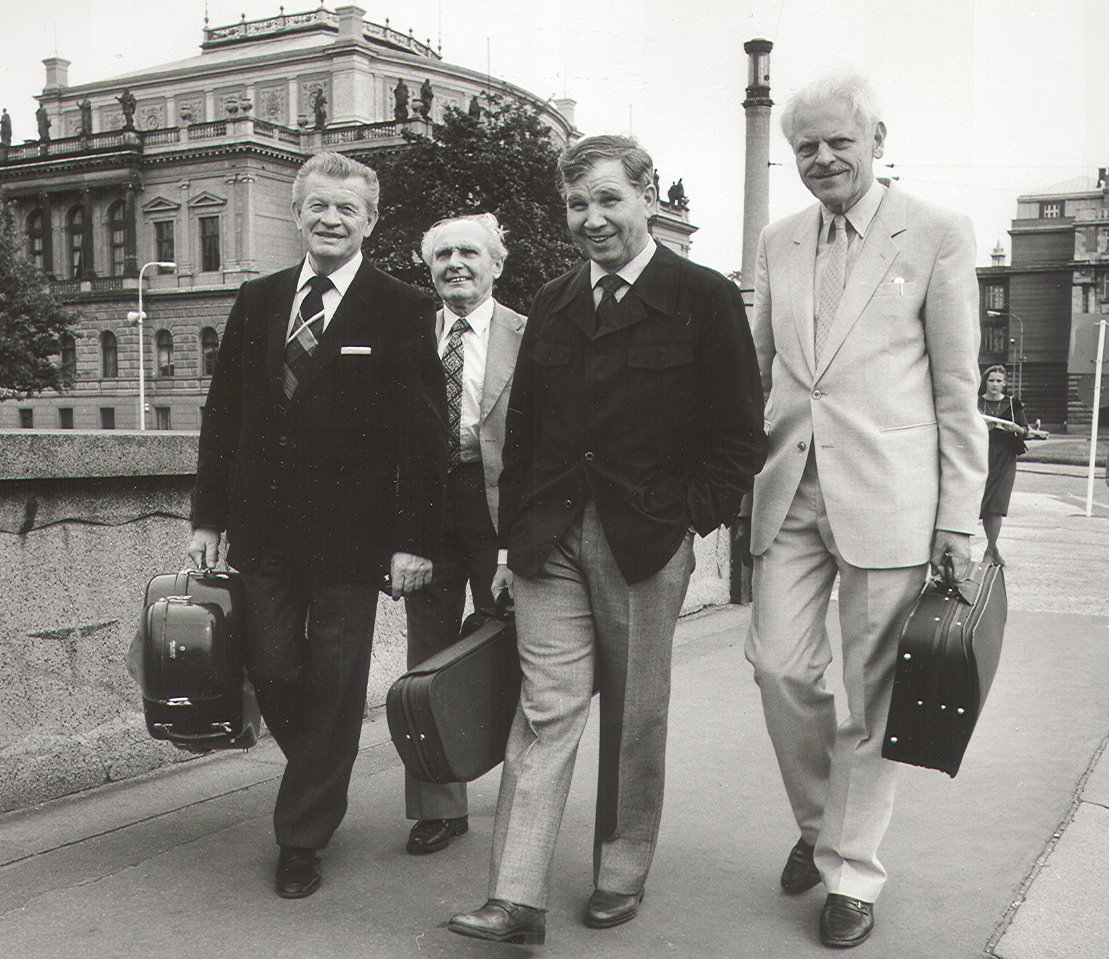
In 1969, they became teachers at the Academy of Performing Arts. Their contribution to pedagogical activities had a strong influence on the further development of the quartet generation, which saw them as an initial model. To this day, their students are prominent figures in leading string ensembles. Panoch Quartet, Kocián Quartet, Pražák Quartet, Martinů Quartet, Wihan Quartet, Škampa Quartet, Haas Quartet.
The last major tour of Japan took place in the fall of 1988. The final concert was held in Brno on June 27, 1989, at Besední dům, marking the definitive end of the Smetana Quartet’s activities.