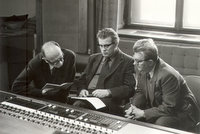
cello (1943-1989), *1919 †2013
He was born on 12th December 1919 in Lubná near Rakovník to a family of a railwayman, who was also an enthusiastic amateur musician. The name Kohout became fateful for him, as both his grandfathers had the same name. Even the midwife, Antonie Kohoutová. His father played the cello every Sunday, as was the custom at the time, and met with his friends in a quartet. Young Antonín would attend their rehearsals as a reward. Although he was originally supposed to play the violin, he eventually convinced his father to let him play the cello. He looks back fondly on his childhood, thanks to his mother who always sang. Already at the music school in Kolín in 1930, as soon as he mastered the basics of playing, he immediately began playing in the first children’s quartet.
He was a student of Prof. Bedřich Jaroš, a member of the Ondříček Quartet, in 1934, and the following year he moved to the class of Karel Pravoslav Sádl, with whom he had been studying since his high school years. He graduated from the conservatory with a concert of Antonín Dvořák in B minor. During this time, he played in quartets of various compositions, and notable names include violinists Jiří Ptáčník, Otakar Šroubek, and violist Vladimír Klár. They studied Haydn, Mozart, Beethoven, Kovařovice, and Smetana’s “From My Life”.
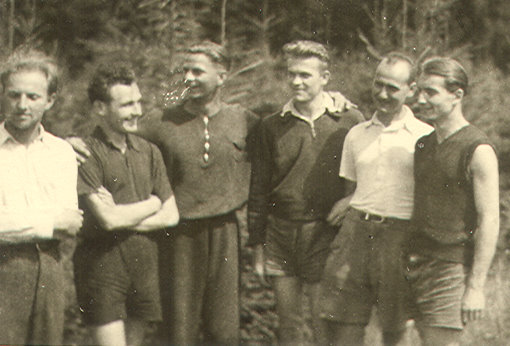
In 1940, Václav Talich accepted Kohout into the Czech Philharmonic among such legendary musicians today as violinists Něměček, Štika, bassoonist Bidlo, oboist Děda, clarinetist Říha. A crucial milestone was the encounter at the Conservatory with the violinist Václav Neumann, who was a year younger. These two strong personalities shared a strong and unified interest in the quartet. At that time, Václav Neumann took the first violin, his brother played the viola, Kohout played the cello, and Josef Vlach played the second violin. In May 1941, they made their debut as the Smíchov Quartet in Nelahozeves with Dvořák’s Es Dur “Slavonic” quartet.
They rehearsed at the Neumanns’ in Smíchov, where they had great support and backing from Mr. Ing. Neumann and expert supervision from Prof. Micky. In 1943, Prof. Micka and K. P. Sádlo, together with Kohout, were working on the new lineup of this ensemble. On September 28, they performed at the City Library with V. Neumann, Jar. Rybenský on violin, Ant. Kohout on cello, and L. Kostecký on viola.
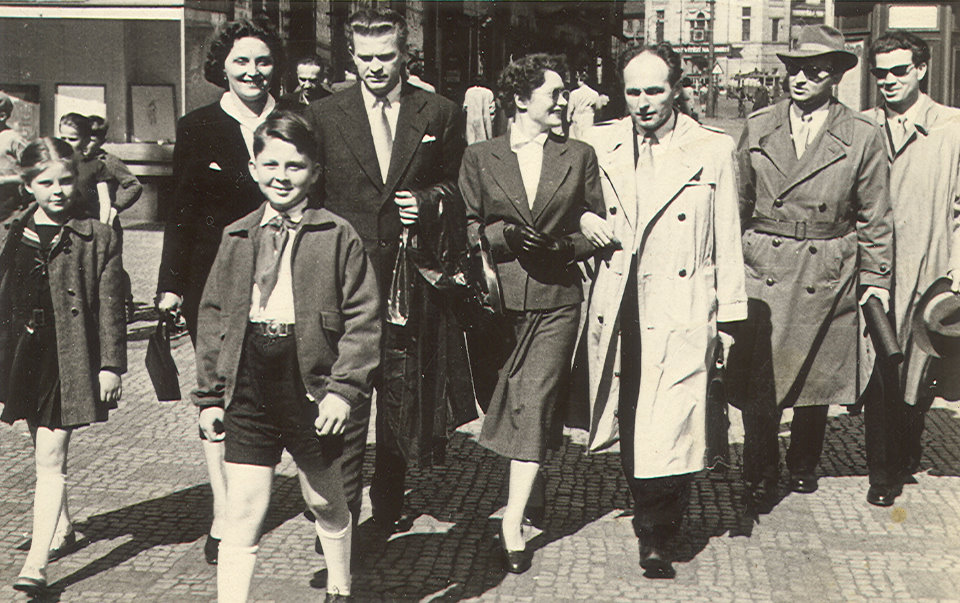
In the same year 1943, Antonín Kohout married his classmate and pianist Marie from Prof. Rauch’s class at the Conservatory. His children are also involved in music. Pravoslav, born in 1943, was a violinist, graduated from the Moscow Conservatory, and now focuses on teaching after an injury to his hand. The first daughter, Milena, born in 1946, studied medicine, but tragically passed away in 1968 shortly thereafter. The second daughter, Marie, born in 1950, is a cellist like her father and performed in the ensemble Alma trio. She later taught at the VSU on Voršilská and at the Komenský School of Arts.
In the following years 1946-52, he studied at the Academy and continued his activities with the quartet under K. P. Sádlo.
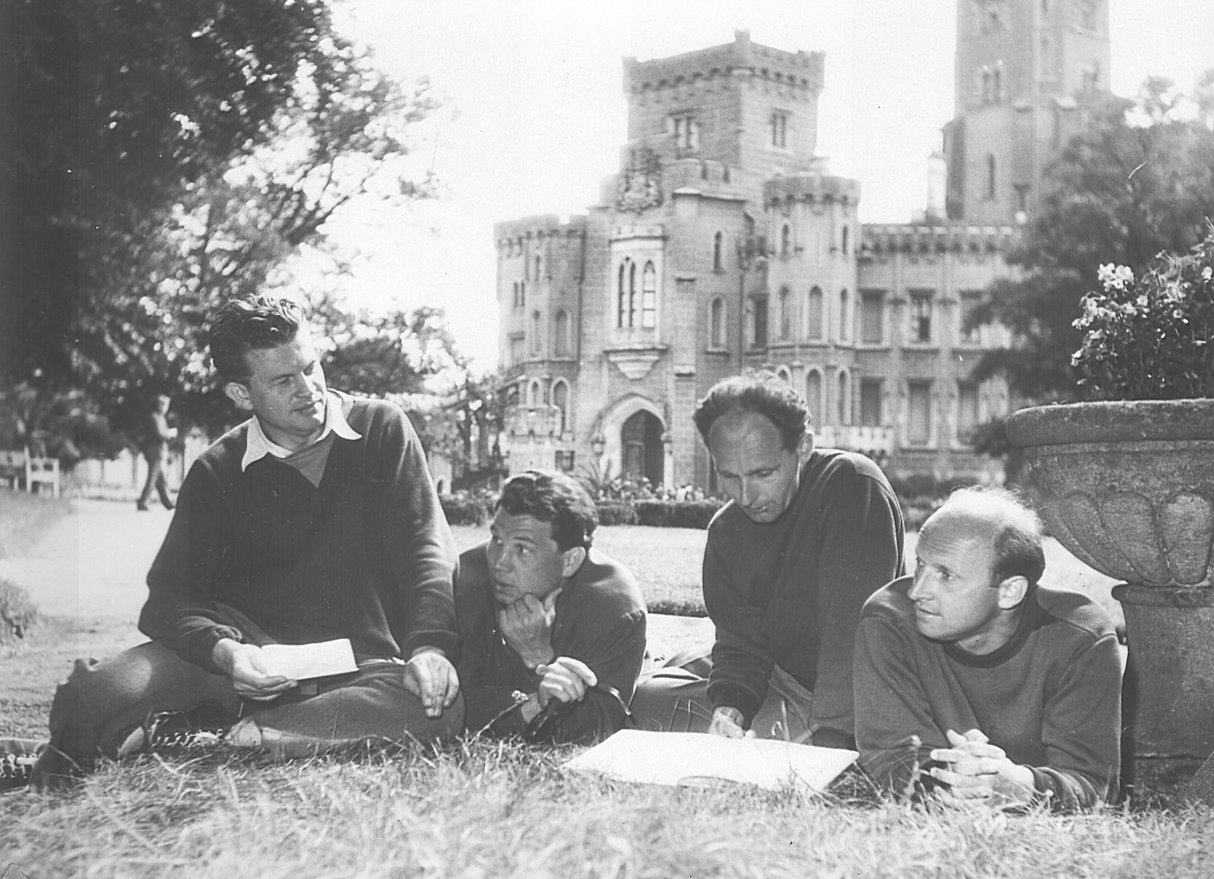
After the war, the working conditions were more promising. Antonín learned one important thing during those beginnings, among other things. Do not be taken aback by the departure of any member of the group and come up with an adequate or even better solution. And that paid off for him. His dream of the Smetana Quartet lasted for more than 40 years! He always knew that the arrival of Jiří Novák was a huge benefit to the quartet. However, without his managerial skills and strong personality to do everything for the quartet’s existence, there might not be anything to write about today.
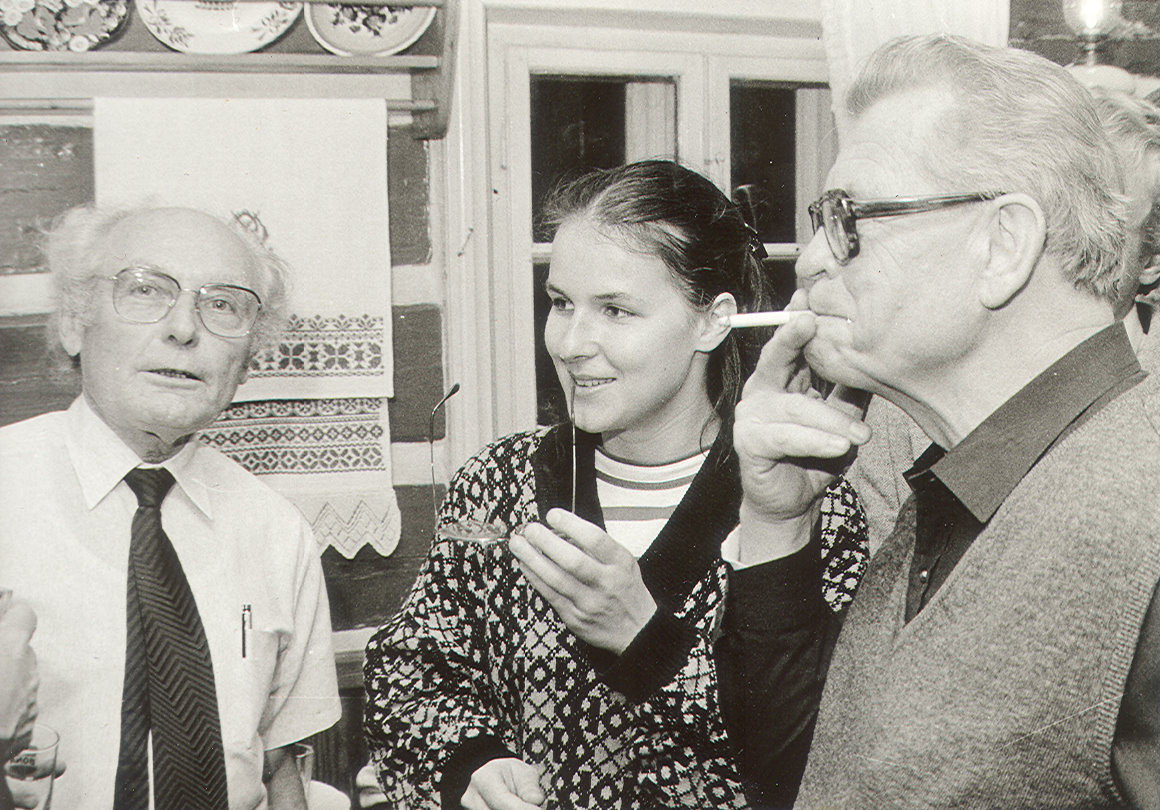
Instead of accepting the position as a professor at the Academy of Performing Arts (AMU), he agreed only on the condition that the offer would be extended to other members of the quartet as well. The offer came in 1969. As a pedagogue at the AMU, he greatly influenced the further development of Czech string quartets. Many ensembles, especially quartets, passed through his class. A large part have persisted and are now forging their own path. The Panocha, Martinů, Kocian, Wihan, Bennewitz, and Nostitz Quartets.
As for the quartet’s preparation method, he studied the entire score and was thus able to memorize his part by heart. The quartet studied intensely from 1948 in the Prague district of Košíře at the home of the Kohout family from 9 am to 1 pm every day. They patiently practiced intonation, fine-tuning harmonies slowly and precisely. Strictly adhering to dynamics and with the most subtle nuances.
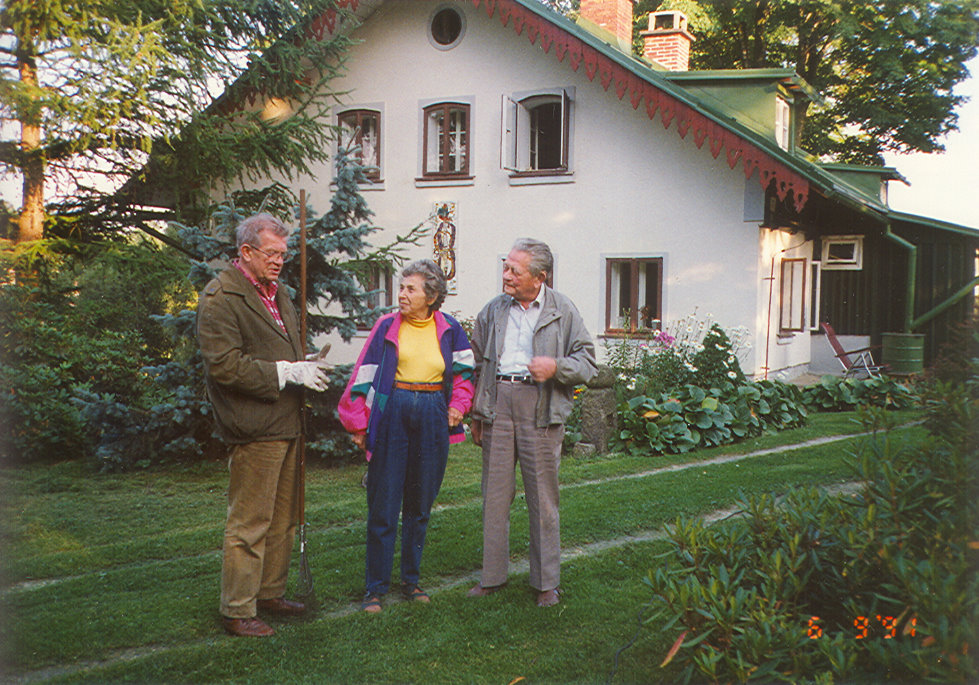
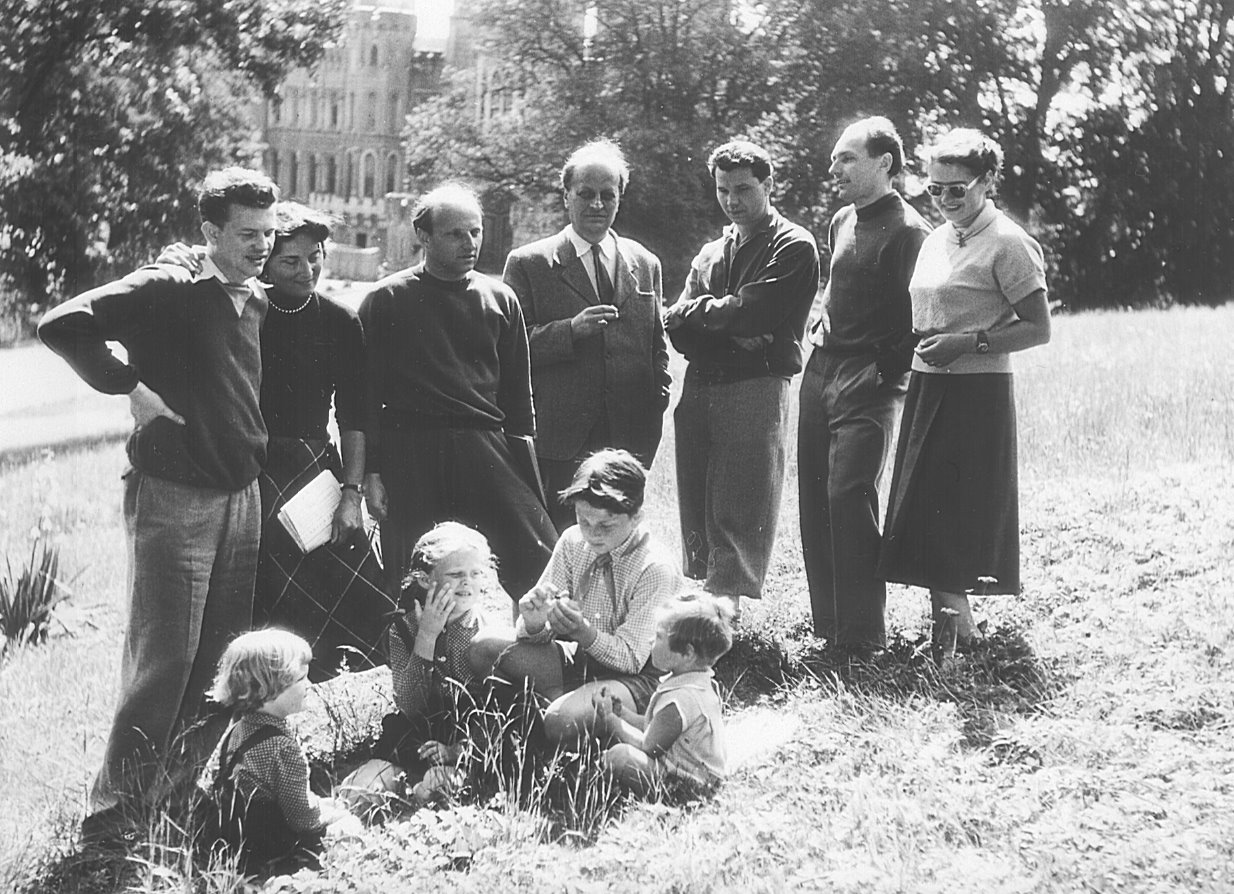
Thanks to his friendship with the pianist Josef Páleníček, he found himself in a region that he chose for relaxation and later as a summer study place for the whole quartet. Lučany nad Nisou in the Jizera Mountains also became a regular summer retreat for the other members, where they could be with their families and practice daily. In the 1950s, they bought cottages where they had to dedicate themselves to activities other than playing musical instruments. Every August in Lučany became the center of numerous musical and friendly gatherings, which were regularly attended by prominent figures from various fields such as the family of Jiří Trnka or the significant dissident Dr. Bedřich Placák. The cottages were also owned by musicians Alexander Plocek, a violinist, Josef Paleníček, a pianist, Milan Kulhan, a music director, Vít Micka, a conductor, and his wife Mirka Kramperová, a pianist, as well as Jiří Pauer, the director of the National Theatre and the chief of the Czech Philharmonic, Mirko Škampa, a cellist and educator, and many others. They were visited by students, doctors, painters, writers, and many other interesting personalities of that time. At the end of summer, regular concerts took place in Lučany, Malá Skála, Tanvald, and elsewhere, serving as a dress rehearsal for the new season.
The instrument played by Antonín Kohout was also borrowed from the state collection in 1975, and it comes from the workshop of Giovanni Grancino 1710 Milano.
Gallery